
Nausea is one of the most distressing symptoms experienced during cancer treatment. It disrupts daily life, interferes with sleep, and makes eating and drinking difficult. When nausea is not managed, patients often struggle to maintain adequate nutrition and hydration—both of which are essential to healing, recovery, and resilience. Supporting your ability to eat, maintain weight, preserve muscle mass, and stay hydrated is critical to helping your body function optimally throughout your cancer journey.
Cancer is not in control. You are. When you take action to manage nausea, you create the conditions for your body to stay strong and well-nourished and recover with resilience more effectively.
Why Nausea Happens During Cancer Care
Cancer itself, as well as cancer treatments like chemotherapy, radiation, targeted therapies, and surgery, can trigger nausea and vomiting. These symptoms may also be intensified by medications, stress, changes in metabolism, and imbalances in your digestive system. While anti-nausea medications are often prescribed, there are additional tools you can use to support your comfort and quality of life. Many patients find that anti-nausea medications create unwelcome and ongoing constipation and are grateful to have alternative approaches that are effective and easy to implement.
Acupressure: A Safe and Simple Tool
Traditional Chinese Medicine (TCM) has used acupressure for centuries to calm the body and support normal digestive function. One of the most studied and effective points for nausea is Pericardium 6 (PC6), also known as Neiguan or Inner Gate.
Research suggests that stimulating PC6 can help support the body’s normal response to nausea caused by changes in digestive function, tumor pressure, postoperative recovery, drug side effects and all types cancer treatments.
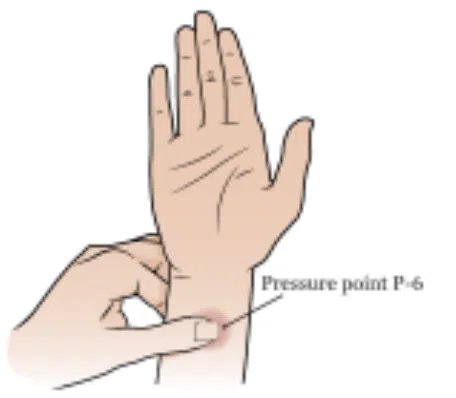
How to Find PC6
- Turn your hand palm up with fingers pointing away from you.
- Measure three finger-widths down from the crease of your wrist.
- Locate the spot between the two large tendons in the center of your inner forearm.
- This is PC6. You should feel the tendons on either side of this point.

Do not do acupressure on this point if:
· The skin at or near the point is peeling or blistering.
· There is an open wound at or near the point.
· There is a rash at or near the point.
· There is redness, swelling, warmth, or pus at or near the point.
Three Ways to Stimulate PC6
1. Acupressure by Hand
- Using your thumb, apply firm but gentle pressure to PC6.
- Massage in small circular motions for 2–3 minutes.
- Repeat on both wrists several times a day as needed.
2. Acupressure Bands
- These wristbands have a small stud that applies constant pressure to PC6.
- Position the stud directly over the point on each wrist.
- Wear them throughout the day, especially during or after cancer treatments.
3. Magnetic or Electronic Bands
- Some acupressure bands combine gentle magnets or mild electronic stimulation with pressure on PC6.
- While research on magnetic therapy is less established, many patients report comfort and support from these tools.
You can find elastic wrist bands online and in many drug stores and pharmacies fitted with a small magnet that should be placed over acupoint PC6. These wrist bands were originally designed for relieving motion sickness but have been found to effectively relieve nausea as well.
You can find electronic wrist bands online that deliver a mild pulse to PC6 throughout the day. Many patients find these bands very effective.
Why Managing Nausea Matters
Uncontrolled nausea leads to reduced food and fluid intake, causing weakness, weight loss, and loss of muscle mass. These changes reduce your resilience, impair immune function, and slow recovery. By supporting your body’s ability to tolerate food and fluids, you protect your strength, energy, and healing capacity.. Not only that…the quality of your day is dramatically improved!
Managing and relieving nausea allows you to continue to implement the OutSmart Cancer® Diet and to continue to take your OutSmart Cancer® Supplements and OutSmart Cancer® Protein Shakes to optimize your nutrition and immunity both during and after treatments, at every stage of your cancer journey and beyond.
Stay hydrated. Sip fluids throughout the day.
Support digestion. Try warm, strong ginger root tea—a traditional remedy that may help ease nausea while gently supporting digestive comfort.
When to Seek Professional Support
If nausea persists, worsens, or prevents you from eating and drinking, speak with your oncology team immediately. They can adjust medications or provide additional interventions. You may also consider working with a licensed acupuncturist to include acupuncture at PC6 as part of your supportive care plan.
Take Charge of Your Healing
Managing nausea is not just about feeling better—it’s about keeping your body nourished and strong. Every step you take to support your health helps you move through treatment with greater ease and vitality.
Create a body where cancer cannot thrive. Use these simple tools to support your resilience, comfort, and healing.
To your health, healing, and wholeness,
Dr. Nalini Chilkov
Founder, OutSmart Cancer® System